Few moments capture the internet’s attention quite like a razor-sharp graduation speech delivered by an unexpected voice. When comedian and actor Ronny Chieng stepped onto Harvard’s podium, the result was an address that thousands have now watched, shared and dissected. If you haven’t yet pressed play, Watch: Ronny Chieng’s Harvard graduation address is not just entertainment – it is a blueprint for ambitious Malaysian students thinking about life overseas.
The speech, originally delivered at Harvard’s 2023 commencement, blends signature wit with genuinely hard-hitting truths about ambition, failure, identity and the global mindset. For Malaysian readers considering Australia, the United Kingdom or the United States as a study destination, Ronny Chieng’s Harvard graduation address becomes even more resonant: here is a Malaysian-born, Singapore-raised, Australia-educated comedian standing on one of the world’s most prestigious stages, telling graduates what nobody else dared to say.
This article breaks down five lessons embedded in the address – and connects each one directly to the decisions Malaysian students face when choosing a university, selecting a country and building a career. Along the way, we will explain why Ronny Chieng’s journey through an Australian law degree is not a quirky footnote but a major clue for anyone mapping out their own path.
Who Is Ronny Chieng and Why Should Malaysian Students Care?
Before unpacking the speech, context matters. Ronny Chieng was born in Johor Bahru, Malaysia, spent his formative years in Singapore and the United States, and eventually moved to Australia for university. He completed a Bachelor of Laws and a Bachelor of Commerce at the University of Melbourne – a fact he wields in his Harvard material to poke fun at elite institutions while quietly proving that a degree from a top Australian university holds its own anywhere.
In his Harvard graduation address, he leans heavily on this cross-border background. He talks about being an outsider multiple times over, about the immigrant work ethic he inherited from his parents, and about the uncomfortable truth that chasing prestige often leads smart people into jobs they hate. For a Malaysian audience, these are not abstract concepts. They reflect the very real tension between cultural expectations, family pressure and the search for genuine fulfilment – a tension many students hope to resolve by studying abroad.
Lesson 1: Elite Institutions Are Not the Whole Story
One of the most quoted lines in Ronny Chieng’s Harvard graduation address is a deceptively simple observation: the name on your degree stops mattering much faster than you think. He illustrates this by pointing out that he went to the University of Melbourne – a university he describes as “the Harvard of the Southern Hemisphere” with deliberate irony – and still ended up in the same entertainment industry that employs Harvard graduates.
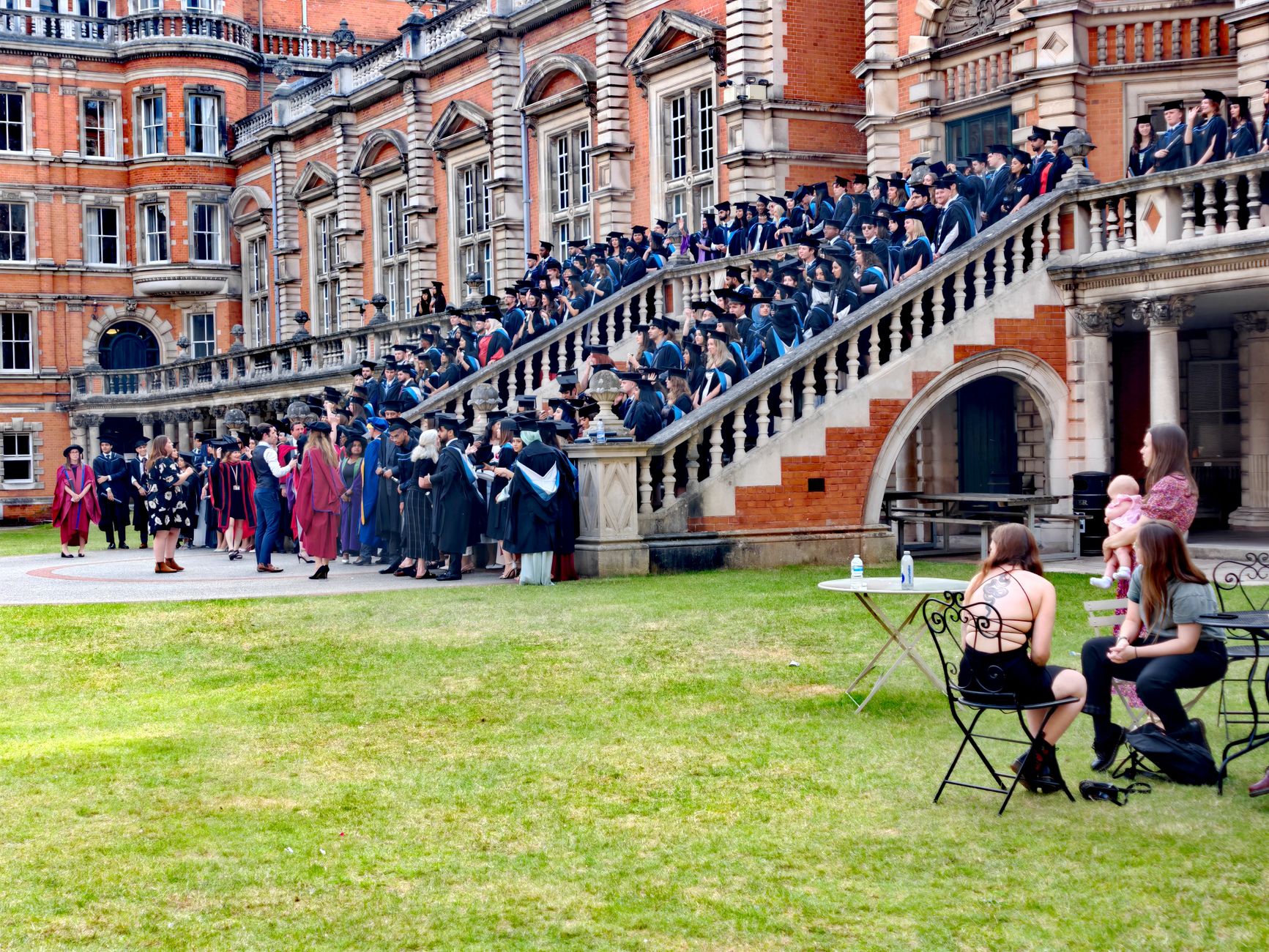
The underlying message is not that Harvard is worthless. It is that institutional prestige, on its own, has a dangerously short half-life. What sustains a career, he argues, is the ability to think independently, to take risks and to build skills that a framed certificate cannot confer. For Malaysian students weighing whether to chase brand-name universities at any cost, this is a reality check. The University of Melbourne, Australian National University, University of Sydney and other Group of Eight members produce graduates who regularly compete with Ivy League alumni – and often win, precisely because they developed resilience and perspective outside the narrow elite bubble Chieng mocks.
This lesson extends beyond Australia. Whether a student is looking at Monash University Malaysia, a British Russell Group campus or a North American college, the core takeaway is identical: the person you become during your degree matters infinitely more than the badge on your graduation gown. Ronny Chieng’s Harvard graduation address drives this home with jokes, but the data backs him up. Employers globally report that soft skills, cultural agility and proven initiative dwarf university reputation when hiring decisions reach the final round.
Lesson 2: The Immigrant Edge Is Real – and Malaysia Gives You a Head Start
Throughout the address, Chieng refers repeatedly to his parents and the immigrant mentality. He describes working in his family’s business, seeing firsthand what it means to sacrifice stability for opportunity, and internalising the idea that discomfort is not a sign you are failing – it is a sign you are growing.
Malaysian students hold a unique advantage here. Growing up in a genuinely multilingual, multicultural society builds exactly the kind of cognitive flexibility that top universities and global employers reward. When Ronny Chieng’s Harvard graduation address urges new graduates to “be comfortable being uncomfortable,” a Malaysian student who has navigated three language streams, a mix of cultural codes and perhaps a stint in a BRT queue already understands this at a gut level.
Australian universities actively seek this profile. International student cohorts at the University of Queensland, UNSW, RMIT and other institutions are filled with Malaysian graduates precisely because Australian admission officers recognise the cross-cultural dexterity Malaysian students bring. Chieng’s own path – Malaysian by birth, legally trained in Australia, globally successful in entertainment – is an exaggerated version of a journey many thousands of Malaysian alumni have taken more quietly.
For students still deciding on a destination, the message is clear: your Malaysian upbringing is not something to downplay in personal statements and interviews. It is a genuine competitive differentiator that, combined with an internationally rigorous degree, creates the kind of narrative that stands out.
Lesson 3: You Will Probably Change Your Mind – and That Is the Point
Another theme that runs through the Harvard graduation address is the frank admission that most of the graduating class will end up doing something different from what they imagine today. Chieng tells them his own law degree gathered dust because comedy pulled harder, and he frames this not as failure but as the inevitable outcome of staying curious.
Malaysian families often prize early certainty: medicine, engineering, law, accounting. But Australia’s flexible education system – with its double degrees, generous credit transfer arrangements and a thriving postgraduate conversion culture – is built for the reality Chieng describes. Students can begin a science degree and pivot toward data analytics. They can combine arts with commerce and later land in tech policy. The post-study work visa framework under Australia’s Temporary Graduate visa (subclass 485) gives Malaysian graduates time to test industries, build networks and pivot before making long-term commitments.
Watching Ronny Chieng’s Harvard graduation address with this lens transforms it from comedy into career counselling. His admission that he “failed” at being a lawyer is, in truth, a vindication of an education system that did not lock him into a single outcome. That same philosophy runs deep in Australian higher education, where the undergraduate experience is designed to produce adaptable graduates rather than narrow specialists.
For Malaysian parents reading alongside their children, this is perhaps the most important takeaway. Sending a student abroad is not just about the first job title. It is about creating the conditions for discovery, and Chieng’s speech is a reminder that the most successful graduates often wrote a script no one predicted.
Lesson 4: Humour and Authenticity Cut Through Any Room
If you watch Ronny Chieng’s Harvard graduation address in full, you notice something technical: the man knows how to read a room. He balances irreverence with respect, self-deprecation with confidence, and never sounds like he is reading a script approved by a committee.
For Malaysian students facing university interviews, scholarship panels and later job applications, this is a masterclass. Authenticity is not a vague soft skill; it is a tactical advantage. International admissions officers sift through thousands of personal statements that sound nearly identical – high grades, leadership roles, passion for making a difference. What they remember is a candidate who sounds like a real human being with a distinctive voice.
Australian universities, in particular, have shifted admissions conversations toward holistic assessment. The Australian National University, for example, now uses a process that considers the whole applicant, including life experience and character. A student who demonstrates self-awareness, cultural perspective and the ability to articulate their story with clarity and humour – exactly the qualities Chieng models – has an edge that cannot be manufactured by essay templates.
What works on a Harvard podium also works in a UAC application, a Monash medicine interview or a Group of Eight scholarship selection. When Malaysian students absorb Ronny Chieng’s Harvard graduation address, they are absorbing more than humour: they are learning how elite communication sounds.
Lesson 5: Choose a Country, Not Just a University
Perhaps the most overlooked dimension of the speech is geographical. Ronny Chieng’s Harvard graduation address was delivered at an American institution by a Malaysian-born comedian who built his career in Australia. That global triangulation is not an accident – it is a product of deliberate choices about which country to call home at different stages of life.
Malaysian students often fixate on university rankings while forgetting that a degree is a three-to-four-year life in a specific country with its own immigration pathways, work rights and cultural rhythms. Chieng chose Australia as a student, stayed to work in comedy and television there, and only later took on roles in the U.S. entertainment industry. Australia gave him a platform that did not require him to be an American citizen from day one.
This matters enormously for Malaysian families evaluating return on investment. Australia’s post-graduation work rights are among the most generous in the English-speaking world. A bachelor’s degree can lead to a two to four-year work visa, and for graduates in fields like IT, engineering, health and education, there are clear pathways to employer sponsorship and permanent residency through the General Skilled Migration program. The United States, by contrast, offers a far more uncertain lottery for international graduates. The United Kingdom’s Graduate Route is competitive but shorter in duration.
Ronny Chieng’s career arc does not prove that Australia is the right destination for every Malaysian student – personal fit must always lead. But it does demonstrate that choosing a country with inclusive institutions, a strong Asian diaspora and robust post-study options can give a young graduate the runway that talent alone cannot provide. When you watch Ronny Chieng’s Harvard graduation address, you are watching the output of a system that let him stay, experiment and fail safely until he found his voice.
FAQ: Ronny Chieng’s Harvard Graduation Address
Where can I watch Ronny Chieng’s Harvard graduation address? The full speech is available on Harvard’s official YouTube channel and across several trusted news platforms. Search “Ronny Chieng Harvard graduation address” to find the complete video, which runs approximately 20 minutes. Watching the full address reveals nuances that short clips often cut.
What is the main message of Ronny Chieng’s speech? Ronny Chieng’s Harvard graduation address argues that institutional prestige matters far less than individual grit, that immigrant values are a superpower, and that real success involves redefining the path other people prescribed for you. He delivers these messages through sharp comedy, personal anecdotes and pointed observations about privilege and hard work.
Is Ronny Chieng a Harvard graduate? No. Ronny Chieng is an alumnus of the University of Melbourne, where he earned a double degree in Law and Commerce. He was invited to speak at Harvard as a distinguished guest, not as an alumnus – a fact he uses to great comic effect throughout his address.
How does Ronny Chieng’s Australian education relate to Malaysian students? Chieng’s University of Melbourne background mirrors a path that thousands of Malaysian students have taken: studying at an Australian university, gaining work experience post-graduation and building a globally portable career. His story showcases how an Australian degree, combined with Malaysia’s multicultural foundation, can produce world-class outcomes.
What should Malaysian students take away from this speech? Students should take away three core insights: first, choose a university and country based on growth potential, not just prestige; second, lean into your Malaysian identity and multilingual upbringing as a unique strength; and third, design an education that keeps doors open rather than closing them early.
Why is the speech so popular among international students? Ronny Chieng’s Harvard graduation address resonates because it speaks the unspoken truths of many international students: the pressure to please parents, the fear of wasting a degree, the guilt of changing direction, and the loneliness of being an outsider. His delivery transforms these anxieties into shared experience and empowers graduates to own their unconventional journeys.
Conclusion: Press Play and Take Notes
Malaysian students standing at the edge of a major decision – which country, which university, which future – rarely receive better career advice than what is packed into a single comedy speech. When you watch: Ronny Chieng’s Harvard graduation address, set aside the laughter for a moment and treat it as a case study. His story is Malaysia-born, Australia-forged and globally recognised. It is not a fluke. It is what happens when a student selects an environment that rewards initiative, tolerates pivots and measures success in decades, not semesters.
If you are researching study destinations, let this speech remind you that the question is not just “Which university will accept me?” but “Which country will give me the space to discover who I really am?” For many Malaysian students, the answer has consistently been Australia – not because it is perfect, but because it proved to be the right launchpad for someone like Ronny Chieng, and it might prove to be the right one for you too.