Is Studying in Australia Still Worth It for Malaysians in 2026?
For many Malaysian families, the decision to study abroad often begins with a simple spreadsheet. On one column, the prestige of an international degree and the promise of global career mobility. On the other, the escalating price tag. With the Malaysian Ringgit (MYR) volatile against the Australian Dollar (AUD) in recent years, parents and students alike are asking: what is the real cost of a study in Australia journey from Malaysia now, and does the investment still pay off?
This article is built for Malaysian English readers navigating the study abroad decision in 2026. We skip the glossy brochures and work with numbers that reflect current exchange rates, updated visa fees, and the latest post-study work policies. You will find the total spend in AUD and MYR, Australian government-approved cost-of-living standards, and the income you can realistically earn after graduation. The goal is not to sell an overseas education, but to give you the cleanest picture possible before you commit to one of the most expensive study abroad choices in the region.
Why Australia Remains the Top Study Abroad Destination for Malaysians
Australia has held its ground as a leading study abroad destination for Malaysian students for decades. According to data from the Australian Department of Education, there were over 21,000 Malaysian enrolments in Australian institutions in early 2025, and preliminary 2026 figures suggest a steady rebound. The reasons go beyond geographical proximity.
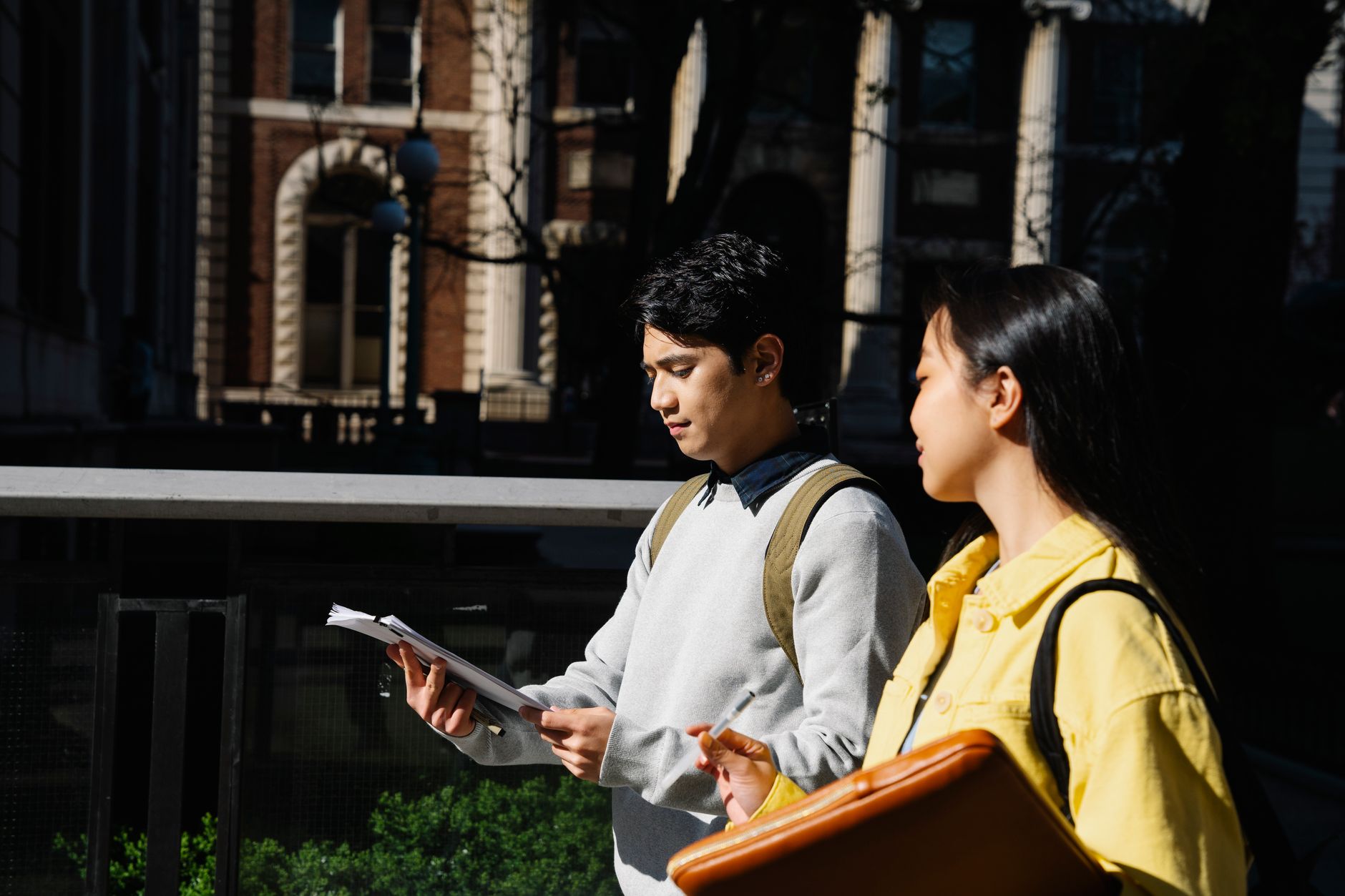
First, Australian universities occupy strong positions in global rankings. The University of Melbourne, The Australian National University (ANU), University of Sydney, UNSW Sydney, Monash University, and University of Queensland all consistently sit within the top 50 globally. For Malaysian parents who view ranking alongside affordability, Australia offers a middle path between the extremely expensive UK/US options and local private universities.
Second, the Malaysian-Australian education connection runs deep. Many Malaysian students are already familiar with the Australian curriculum through franchise programmes, twinning degrees, and the popular Australian Matriculation (AUSMAT) programme in Malaysia. The transition from a Malaysian classroom to a Melbourne or Sydney lecture hall is culturally smoother than to the US or Europe.
Third, Australia’s post-study work rights and skilled migration pathways remain more accessible than those of most other study abroad destinations. The Temporary Graduate visa (Subclass 485) now offers up to 2–4 years of post-study work depending on location and qualification, which is a tangible path to permanent residency (PR) for graduates who fall under in-demand occupation lists. That is a crucial selling point for Malaysian families who view study abroad as a long-term migration strategy, not just a degree.
Top Australian Universities for Malaysian Students and What They Cost
When Malaysians compare Australian universities, the Group of Eight (Go8) often dominates the shortlist. Here are the headline annual tuition fees for popular undergraduate programmes as listed in 2026 international student prospectuses, converted to MYR at a rate of 1 AUD ≈ 2.85 MYR (indicative as of early 2026).
- University of Melbourne: Bachelor of Commerce ~AUD 48,500 (≈MYR 138,200); Bachelor of Science ~AUD 49,200 (≈MYR 140,200).
- University of Sydney: Bachelor of Arts ~AUD 46,500 (≈MYR 132,500); Bachelor of Engineering Honours ~AUD 53,000 (≈MYR 151,000).
- UNSW Sydney: Bachelor of Commerce ~AUD 47,500 (≈MYR 135,400); Bachelor of Computer Science ~AUD 50,500 (≈MYR 144,000).
- Monash University: Bachelor of Business ~AUD 47,200 (≈MYR 134,500); Bachelor of Information Technology ~AUD 46,800 (≈MYR 133,400).
- University of Queensland: Bachelor of Engineering (Honours) ~AUD 48,800 (≈MYR 139,100); Bachelor of Health Sciences ~AUD 42,600 (≈MYR 121,400).
- Australian National University (ANU): Bachelor of Arts ~AUD 45,600 (≈MYR 130,000); Bachelor of Science ~AUD 48,000 (≈MYR 136,800).
Non-Go8 universities like RMIT University, University of Technology Sydney (UTS), and Curtin University are also popular among Malaysian students because they offer comparable quality at a lower price point. For example, a Bachelor of Business at RMIT in 2026 costs approximately AUD 38,400 (≈MYR 109,400) per year. This is a savings of nearly MYR 30,000 annually compared to a Go8 commerce degree. Such differences force Malaysian families to weigh reputation against cash flow, a recurring calculus in any study abroad plan.
Living Costs in Australia: The Ringgit Reality for Malaysian Students
Tuition is only one part of the equation. The Australian Department of Home Affairs requires international students to demonstrate a minimum of AUD 24,505 per year for living costs (not including tuition) for the primary student in 2026. This figure covers accommodation, food, transport, phone, and basic entertainment. For a spouse or dependant, add AUD 8,574; for a child, add AUD 3,670. Translated to MYR, a Malaysian single student must budget at least MYR 69,840 per year for living expenses alone. In cities like Sydney or Melbourne, realistic costs push closer to AUD 28,000–35,000 (MYR 79,800–99,800).
Accommodation is the biggest line item. A shared room near the University of Sydney campus can cost AUD 250–380 per week (MYR 710–1,080). Purpose-built student accommodation (PBSA) like Scape or Unilodge in Melbourne averages AUD 400–550 per week (MYR 1,140–1,570). Malaysian students who can stay with relatives in Australia have a significant cost advantage. Cooking meals instead of eating out saves at least AUD 100 per week; a single cafe brunch in Australia now commonly exceeds AUD 25 (MYR 71).
When a Malaysian family plans a study abroad budget, we recommend working with an annual all-in figure of at least AUD 85,000–95,000 for a Go8 university and an AUD 65,000–75,000 band for a mid-tier city like Adelaide or Perth. Converted, that is MYR 242,000–270,000 or MYR 185,000–214,000 per year. For a standard three-year degree, the total study abroad commitment can range between MYR 555,000 and MYR 810,000, not including airfares, health cover (OSHC), and visa fees.
Visa Rules and Work Rights: What Malaysian Students Can Earn While Studying
A Student visa (Subclass 500) remains the entry point. As of 2026, the base application fee is AUD 1,600 (≈MYR 4,560), plus an additional applicant charge for family members. The Student (subclass 500) visa allows work up to 48 hours per fortnight during study terms and unlimited hours during recognised breaks. This is a critical income stream for Malaysian students looking to lessen the study abroad financial load.
If we assume a casual hospitality or retail wage of AUD 25–30 per hour before tax, a student working the maximum 24 hours per week can gross roughly AUD 600–720 a week during term. Over a 40-week academic year, that is AUD 24,000–28,800 (MYR 68,400–82,100). This can cover the bulk of living expenses, provided the student does not rely on it for tuition. However, it requires discipline; academic performance can suffer if work hours crowd out study time. Universities also restrict course progress, so failing subjects to work more is a fast track to visa cancellation.
Another 2026 change Malaysia-based agents often miss: the Genuine Student Test, which replaced the previous GS requirement, requires evidence of linguistic readiness (IELTS Academic band score of at least 6.0 overall for most undergraduate programmes, but competitive courses demand 6.5–7.0) and financial capacity. The savings history or sponsor affidavit must be presented in a way that matches the lifestyle in Australia. Many Malaysian families show fixed deposits, EPF statements, or parental income tax returns. A weak submission can delay a study abroad timeline by months.
Post-Study Work and PR: The Return on a Malaysian Family’s Investment
For many Malaysian students, a study abroad journey is not complete until the degree converts into work experience—and for some, a permanent future in Australia. The Temporary Graduate visa (Subclass 485) allows graduates to live and work in Australia after completing their studies. In 2026, the Post-Study Work stream grants:
- Bachelor degree graduates (including honours): 2 years.
- Masters by coursework graduates: 2 years.
- Masters by research graduates: 3 years.
- Doctoral graduates: 4 years.
There is an additional 1–2 year extension for graduates who studied and live in designated regional areas (such as Adelaide, Perth, Gold Coast, or Canberra), taking the total to 3–4 years for many.
What does this mean in Ringgit? A fresh accounting graduate from Monash University in Melbourne can expect a starting salary of AUD 60,000–65,000 (MYR 171,000–185,000) per year. A registered nurse, with demand still high in 2026, can start at AUD 72,000+ (MYR 205,000+). If the family spent around MYR 700,000 on a three-year degree, the graduate’s gross earnings in their first post-study year alone could be 25–30% of the total study abroad outlay. Over three years on a 485 visa, the cumulative income may exceed MYR 500,000, significantly narrowing the net investment gap.
For those targeting permanent residency, the pathway runs through skilled occupation lists. Common qualifying occupations among Malaysian graduates include Accountant (General), Civil Engineer, Software Engineer, Registered Nurse, and Early Childhood Teacher. Applicants need a positive skills assessment, at least 65 points on the points test, and an invitation through SkillSelect. This is where study abroad decisions intersect with life planning: choosing an occupation with strong PR prospects can influence course selection, regional study location, and whether the family’s investment delivers not just a qualification but a second passport.
Scholarships and Funding Options Malaysian Students Often Overlook
While Australian universities are full-fee destinations for international students, scholarships exist for Malaysian applicants that can materially reduce the study abroad cost. The Australia Awards Scholarships, funded by the Australian government, occasionally include Malaysian citizens for select postgraduate programmes. Commonwealth-supported postgraduate research pathways also waive tuition for high-achieving research candidates.

On the institutional side, most Go8 universities offer automatic international merit scholarships that can cut fees by 10–30%. For example, Monash University’s International Merit Scholarship awards AUD 10,000 per year to high-achieving students. The University of Sydney Vice-Chancellor’s International Scholarship covers up to AUD 40,000 of tuition across the degree. Malaysian students with strong STPM, UEC, A-levels, or Australian Matriculation results should treat these not as rare windfalls but as negotiated items—placing two offers side by side often prompts a better scholarship offer from the university keen to secure the enrolment.
Outside government and university funding, some Malaysian state foundations and corporate sponsors—such as Bank Negara Malaysia, Khazanah, Petronas, and Yayasan Pahang—offer scholarships for study abroad, though often with Malaysian return-service bonds. Education loans from Malaysian banks (Maybank, CIMB, RHB) typically cover tuition and living expenses up to MYR 300,000, with repayment after graduation. Using a mix of scholarship, loan, and family contribution, many middle-class Malaysian families engineer a study abroad affordability that initially seemed out of reach.
FAQ
How much does it cost to study abroad in Australia from Malaysia in 2026? For a standard undergraduate degree at a Group of Eight university, expect total annual costs (tuition + living) between AUD 85,000 and 95,000, or approximately MYR 242,000–270,000. At mid-tier universities in smaller cities, the annual total can drop to AUD 65,000–75,000 (MYR 185,000–214,000).
Can Malaysian students work while studying in Australia? Yes, on a Student visa (Subclass 500) you can work up to 48 hours per fortnight during study terms and unlimited hours during semester breaks. This can offset most living costs if you manage your time effectively.
What are the top courses for Malaysian students aiming for PR in Australia? Nursing, engineering (Civil, Mechanical, Electrical), accounting, IT (software engineering, cybersecurity), early childhood teaching, and certain allied health professions have historically strong pathways to permanent residency via the skilled migration program.
Do Malaysian students need IELTS to study in Australia? Most universities require IELTS Academic with an overall band score of 6.0–7.0, depending on the course. Some also accept MUET, TOEFL iBT, or PTE Academic. You may be exempt if you completed prior education entirely in English.
Is it cheaper to study abroad in Australia or the UK from Malaysia? Both are expensive. However, UK degrees are typically three years compared to Australia’s three-to-four-year bachelor programmes, making UK slightly cheaper in terms of time. Australia, however, offers more generous post-study work rights, which can yield a stronger financial return after graduation.
The Real Bottom Line for Malaysian Students Planning to Study Abroad
A Malaysian family’s study abroad decision to Australia in 2026 is not a simple price comparison between local and overseas universities. It is a multi-year financial plan that runs from the first semester fee to the day a graduate receives their first skilled migration invitation. The numbers are large: MYR 600,000 to over MYR 800,000 for a full degree. But they are not impossible to manage when work rights, scholarships, and post-study earnings are built into the equation from the start.
The students who succeed are those who treat the study abroad journey as a deliberate career and migration strategy, not just an education purchase. That means choosing a course aligned with skilled occupation lists, picking a city where living costs match the family budget, and securing every scholarship dollar available. If the plan is built with hard numbers and not wishful thinking, an Australian study abroad investment can still produce returns that far exceed the initial Ringgit outlay.