One-line direct answer
UNSW Sydney ranks 84th globally (QS 2025) with exceptional strength in engineering, business, and law. Its distinctive trimester system (January, May, September starts) offers flexibility for Malaysian students. Annual tuition ranges from AUD 28,000–42,000 (MYR 81,000–122,000); direct entry requires STPM 3.0+ GPA or A-Level grades A–B. Kensington campus is vibrant but congested; the trimester model requires discipline to avoid study fatigue.
UNSW’s global standing and strengths
UNSW Sydney (formally UNSW Australia) ranks 84th globally (QS World University Rankings 2025) and is consistently Australia’s 3rd or 4th ranked university. Its reputation is distinctly applied and industry-focused, contrasting with ANU’s research emphasis and University of Melbourne’s academic breadth.
Key strengths:
- Engineering: UNSW Engineering is Australia’s largest engineering school and ranks 15th globally (QS Engineering Rankings 2025). Particularly strong in civil, electrical, mechanical, and chemical engineering. UNSW graduates dominate Australia’s major infrastructure and mining projects.
- Business and Commerce: UNSW Business School ranks in the world’s top 50 for business education. Degrees in finance, accounting, commerce, and MBA are highly regarded by multinational corporations and investment banks.
- Law: UNSW Law is top-tier, particularly for corporate law, intellectual property, and international law.
- Science and Technology: Computer science, data science, and mathematics are all high-quality, with strong industry partnerships in tech startups and established software firms.
UNSW’s defining characteristic is industry engagement. Almost all major engineering and business programmes include internship requirements, live project components, or industry partnerships. This makes UNSW graduates immediately job-ready; employers value UNSW degrees for technical competence and practical orientation.
The trimester system: flexibility and drawbacks
UNSW operates a trimester system rather than the traditional semester system used by other Australian universities. The academic year is divided into three equal 13-week terms:
- Term 1: January–April
- Term 2: May–August
- Term 3: September–November
Each trimester is immediately followed by a four-week break. This allows UNSW to offer multiple intake periods (January, May, September) and permits flexibility in when students take breaks.
Advantages for Malaysian students:
- Multiple intake dates: If you miss the February intake at other universities, UNSW’s May or September starts provide alternatives. Useful if visa processing is delayed or you wish to defer entry.
- Flexible pacing: Some students take two trimesters back-to-back and take a longer break between; others spread out their workload. Flexibility suits students with family or work commitments.
- Shorter teaching blocks: Thirteen-week terms are slightly more compressed than 14–16 week semesters, potentially intensifying focus.
Disadvantages:
- Constant assessment: With more frequent intake points, assessment is continuous. Exams and assignments are spread throughout the year rather than concentrated in two exam blocks. For some students, this reduces stress; for others, it feels relentless.
- Reduced socialisation: With some students leaving after each trimester and new cohorts arriving, social bonding across cohorts is weaker. You may graduate without knowing students from adjacent cohorts in your programme.
- Less aligned with international norms: If you transfer to a US or UK university, UNSW’s trimester transcripts may require conversion to semester equivalents, causing minor administrative friction.
Reality check: UNSW’s trimester system is not inherently superior or inferior to semesters; it suits some students and disorients others. If you thrive on variety and dislike long stagnant periods, trimesters suit you. If you prefer deeper study blocks and consolidated breaks, semesters are more natural.
Entry requirements by Malaysian qualification
SPM holders: Direct bachelor entry is not available to SPM graduates. UNSW requires completion of a Foundation Year or equivalent (12 months). UNSW Foundation Year (on-campus at Canberra or sometimes available in partnership institutions) costs AUD 20,000–28,000 (MYR 58,000–81,000). Completion with 70%+ average in core subjects permits direct entry to bachelor year one.
STPM holders: Direct entry is standard. Entry requirements vary by programme:
- Engineering: STPM cumulative GPA 3.0–3.3 (approximate 70–80% average)
- Commerce / Business: STPM GPA 2.8–3.1 (65–75% average)
- Science: STPM GPA 2.8–3.0 (65–75% average)
- Law: STPM GPA 3.2–3.5 (75–85% average) — more competitive
STPM students can commence in January (Term 1), May (Term 2), or September (Term 3), depending on when their STPM results are released and visa processed.
UEC (Unified Examination Certificate): Form 6 UEC is accepted. Entry requirements are roughly equivalent to STPM:
- Combined UEC Band 5 across all subjects ≈ STPM 3.0 GPA.
- UEC Band 4 ≈ STPM 2.8 GPA.
- Grades in mathematics and English are weighted more heavily for engineering and science.
A-Levels: Three A2 subjects with grades A–B permit direct entry. A-Level is often viewed as marginally easier than STPM for UNSW entry due to its international recognition.
International Baccalaureate (IB): Total score 32–38 out of 45, with requirements varying by programme (medicine and law require 36–38).
Kensington campus and Sydney location
UNSW’s main campus is located in Kensington, an inner-eastern suburb of Sydney, approximately 8 km south-east of the CBD. The campus is bustling, modern, and vibrant.
Campus experience:
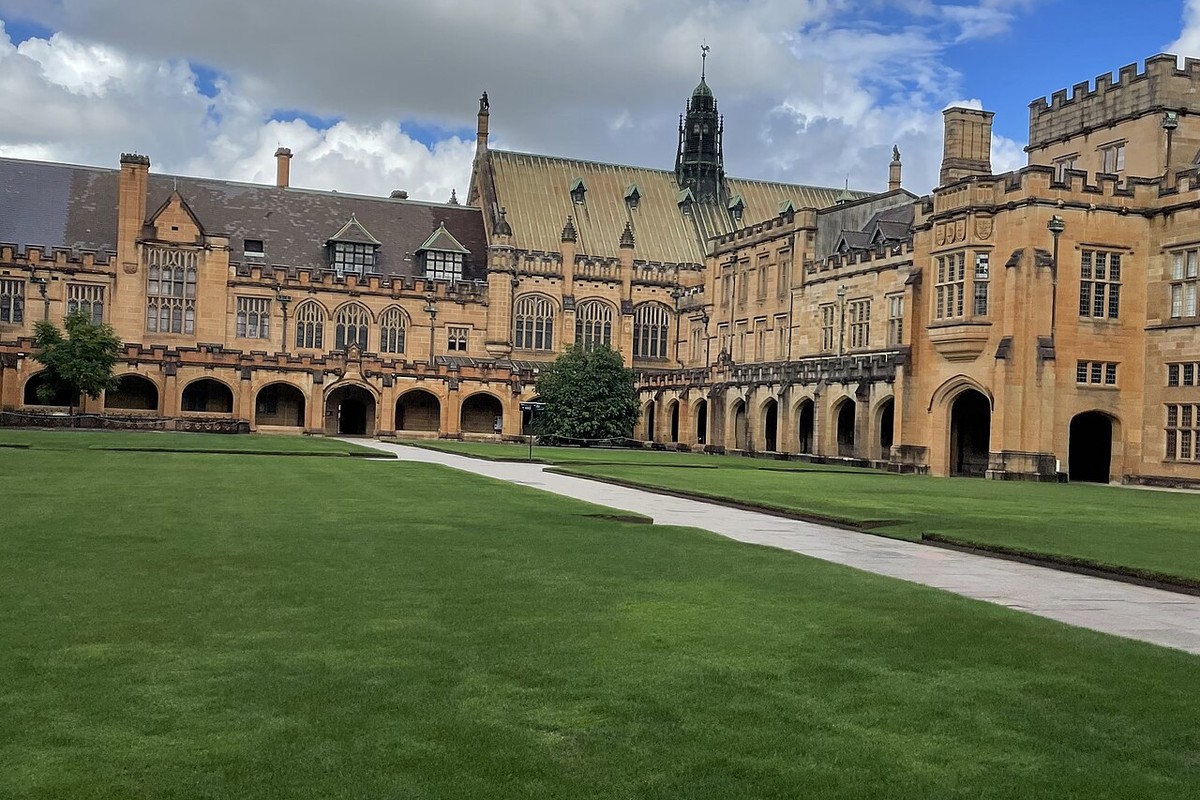
- Facilities: UNSW has invested heavily in teaching facilities, libraries, and student spaces. The Red Centre (engineering building), Quadrangle (arts and sciences), and newer student hub provide ample study and social space.
- Size: With 55,000+ students (including international), UNSW is large. This means abundant diversity and specialist resources, but also crowded libraries and lecture theatres during peak times.
- Accessibility: Kensington is well-served by public transport (bus, light rail). Direct bus and train links to the CBD (15 minutes), Bondi (25 minutes), and Coogee (15 minutes). Most students live in nearby suburbs (Kensington, Randwick, Maroubra, Clovelly) within walking or 10-minute bus distance.
Living costs around Kensington:
- On-campus accommodation: AUD 160–200 per week (limited spaces, competitive).
- Private share housing: AUD 150–200 per week in Kensington, Randwick, Clovelly; AUD 140–170 in slightly further-out suburbs (Maroubra, Mascot).
- Total living cost (rent + food + transport): AUD 1,800–2,400 per month (MYR 5,200–7,000 per month).
Kensington is one of Sydney’s more expensive residential areas but offers the advantage of proximity to university and the beach. Some students trade off proximity for cost, living in outer suburbs (Parramatta, Westmead) and commuting 45–60 minutes; this is not recommended for your well-being.
Application pathway and timeline for Malaysian students
STPM/A-Level/UEC applicants:
- November–December (Year 12): Begin UNSW online application whilst waiting for final exam results.
- February–March: Submit final exam results (STPM results released mid-March for Malaysian students). UNSW processes applications on a rolling basis; earlier applications have priority.
- April–June: UNSW issues offers to successful applicants. Offers are typically valid for 4–6 weeks.
- June–July: Accept offer and pay deposit (typically AUD 4,000–5,000, MYR 11,600–14,500).
- July–September: Apply for student visa (Subclass 500) with UNSW’s Certificate of Enrolment. Processing time is typically 2–4 weeks. Visa approval unlocks access to Australian bank accounts and study-related work permissions.
- September–December: Obtain health insurance (Overseas Student Health Cover, OSHC), arrange accommodation, and prepare for January intake arrival.
Timeline note: For Malaysian students, the February intake is most accessible (results released, visa processed in time). May intake requires earlier visa processing if you wish to arrive in May; September intake is most relaxed timeline-wise.
Common questions
Is the trimester system harder than semesters? Not inherently harder, just different. Thirteen-week terms compress the same content into slightly shorter timeframes. Most students adapt within one trimester and view it as normal. The key is avoiding “trimester fatigue” — planning breaks strategically rather than working three trimesters consecutively.
How do I choose between UNSW and University of Sydney for engineering? Both are excellent. UNSW Engineering is larger, more prestigious globally, and more industry-embedded (more internship requirements, co-op options). University of Sydney’s engineering is slightly smaller, slightly less applied, and ranked marginally lower. For engineering specifically, UNSW has a modest edge. For civil engineering, both are comparable. Cost and location (UNSW Kensington vs. Sydney Camperdown) are likely deciding factors.
Can I change my trimester intake date after applying? Yes, typically without penalty if requested before the deposit payment deadline. Some students apply for January and defer to May if visa processing is delayed. Contact UNSW International Student Admissions to confirm flexibility in your specific case.
Is on-campus accommodation at UNSW available for all students? No. UNSW has approximately 5,000 on-campus beds for 55,000 students. On-campus accommodation is competitive and prioritised for first-year students, international students, and those with documented need. Most students live in private share housing within walking distance. This is not a disadvantage; private accommodation offers better value and social flexibility.
What is UNSW’s reputation in Malaysia? UNSW is well-known, particularly among engineering and business professionals. Multinational companies operating in Malaysia (ExxonMobil, Shell, Microsoft, KPMG) recruit from UNSW. For engineering and finance careers specifically, UNSW is slightly more recognisable than other Go8 universities due to its industry profile.
Does UNSW offer graduate employment support? Yes. The University Career Centre provides resume review, interview coaching, and recruiter networking. UNSW’s strong industry partnerships mean many employers recruit directly on campus. Graduate employment rate is 85%+ within six months, aligned with other Go8 universities.
Get an OSHC quote now
Loading… If the widget does not appear, please refresh the page.
Sources
- UNSW Sydney admissions — unsw.edu.au/study
- UNSW Engineering — engineering.unsw.edu.au
- UNSW Business School — business.unsw.edu.au
- QS World University Rankings 2025 — topuniversities.com
- Australian DHA Student Visa — immi.homeaffairs.gov.au